48V vs 52V E-bike Battery: Which Voltage Should You Spec?
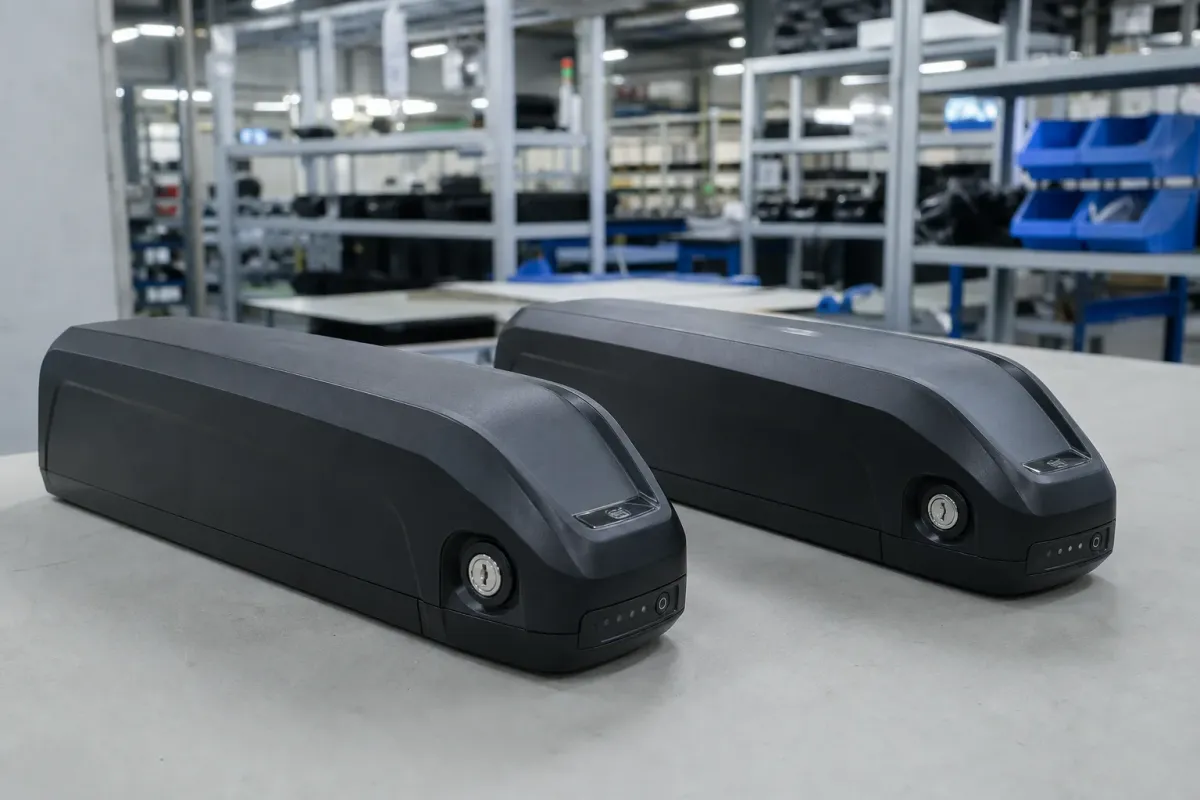
48V and 52V are the two voltages most OEM e-bike programs end up choosing between. They look almost interchangeable on a spec sheet — and in many systems they physically are — but the difference shows up in power, range, heat, and component cost. Here is what actually changes when you move from 48V to 52V.
This is a deep-dive on one of the six decisions in our E-bike Battery Pack Sourcing Guide for OEMs.
The short answer
52V gives you a bit more speed, torque, and range than 48V at the same amp-hours, and runs slightly cooler for a given power output. 48V is the mainstream, lowest-cost, most widely compatible choice. Spec 52V when the duty cycle is demanding — hills, cargo, heavier riders — and 48V when cost and broad compatibility matter more.
| 48V | 52V | |
|---|---|---|
| Series configuration | 13S | 14S |
| Nominal voltage | ~46.8V | ~50.4V |
| Fully charged | 54.6V | 58.8V |
| No-load speed | Baseline | ~7.7% higher (≈2–5 mph) |
| Instantaneous power | Baseline | ~16.6% higher |
| Range at the same Ah | Baseline | Slightly higher (Wh = V × Ah) |
| Current draw for the same output | Higher | Lower — less I²R heat, thinner cabling, lower-amp BMS |
| Controller compatibility | Broadest | Usually fine, but confirm max input voltage |
| Relative cost & sourcing | Lowest, widest availability | Small premium, narrower component pool |
| Best fit | Cost-sensitive commuter and city builds | Hills, cargo, heavier riders, continuous high power |
Each row is unpacked below.
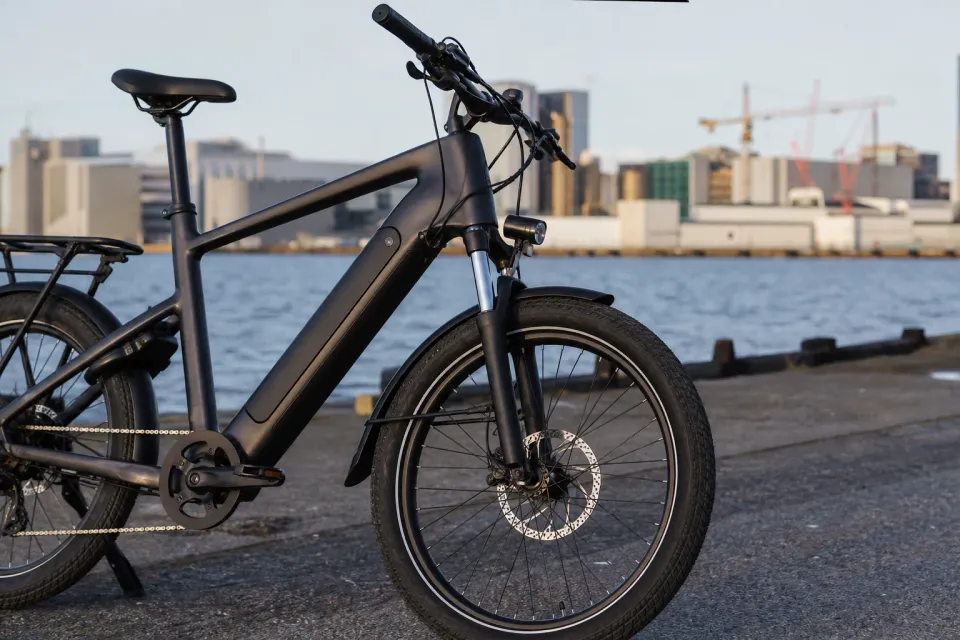
What the numbers actually mean: 13S vs 14S
The “48V” and “52V” labels describe nominal voltage, not the full story. Both packs use lithium cells with a ~3.6–3.7V nominal and 4.2V fully charged:
- A 48V pack is 13 cells in series (13S) — nominal ~46.8V, fully charged 54.6V.
- A 52V pack is 14 cells in series (14S) — nominal ~50.4V, fully charged 58.8V.
That single extra series group is the whole difference. It is why a “48V” pack already delivers 54.6V off the charger — a detail that matters for compatibility below.
Performance: what 52V buys you
Higher voltage pushes more power to the motor at the same current, so 52V is the quicker pack. Typical figures put a 52V system at roughly 7.7% higher no-load speed than 48V — on the order of 2–5 mph faster — with instantaneous power (and therefore launch and hill-climb torque) up around 16.6%.
Range improves too, though modestly. Energy is volts times amp-hours (Wh = V × Ah), so at the same Ah, a 52V pack simply holds more watt-hours than a 48V pack and goes a little further — if you don’t spend the extra power on speed. Treat 52V’s range edge as a bonus, not the headline reason to choose it.
Efficiency & heat: the quiet advantage of higher voltage
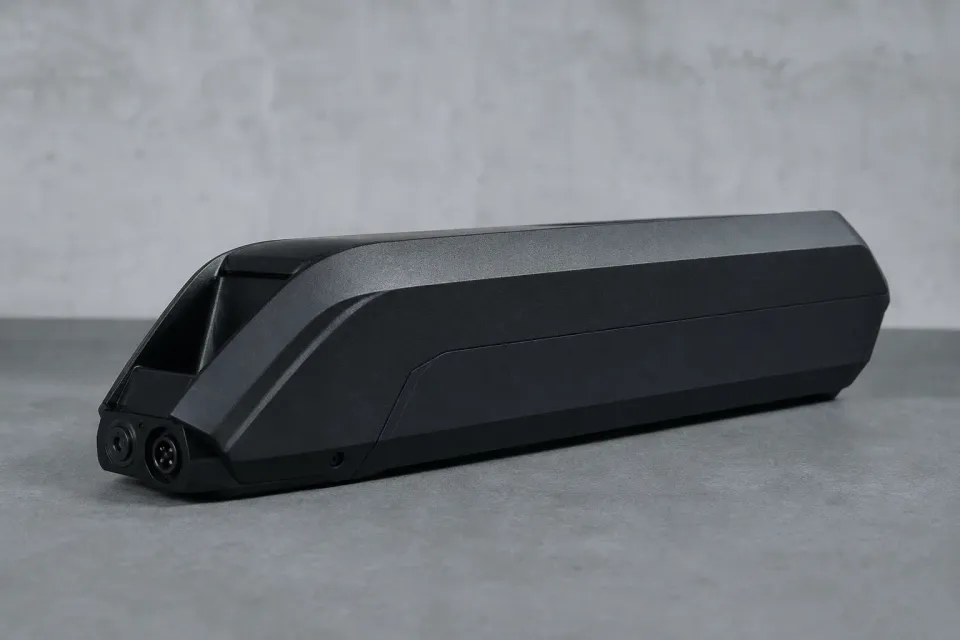
Because power is voltage times current (P = V × I), delivering the same wattage at a higher voltage means less current. A 52V pack draws fewer amps than a 48V pack for the same motor output, which means lower resistive (I²R) losses, less heat in the wiring and connectors, and the option of a lower-amp BMS and thinner gauge cabling. For high-power or continuous-duty builds, that thermal headroom is a real, if unglamorous, engineering win.
Compatibility: will 52V run on a 48V system?
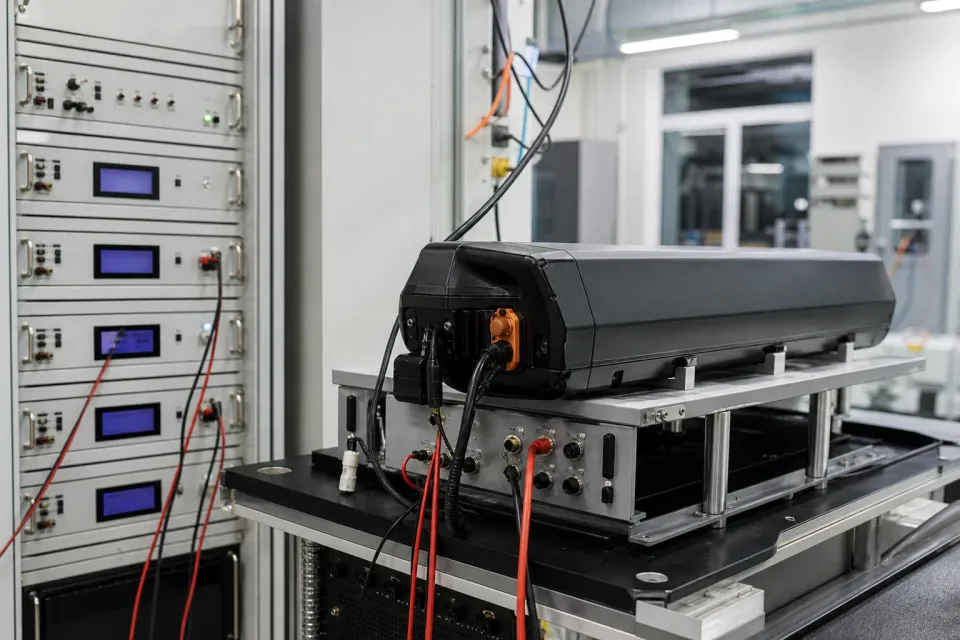
Usually, yes — but verify, never assume. The key fact: a 48V pack already peaks at 54.6V when full, so most modern “48V” controllers are built with voltage headroom and accept a 52V pack’s 58.8V. Still, the rule from the sourcing guide holds — match the pack to the controller’s rated voltage window. Before committing, confirm the controller’s maximum input voltage; running 58.8V into a controller that tops out at 54.6V risks tripping overvoltage protection or damaging components. When in doubt, design the system around one voltage from the start.
So which should you spec?
- Choose 48V for cost-sensitive, mainstream commuter and city builds where compatibility and component availability matter most.
- Choose 52V when the duty cycle is demanding — steep terrain, cargo, heavier riders, or continuous high-power use — and you want extra speed, torque, and thermal margin.
Decide from the vehicle’s real-world load and the controller you are building around, not from the bigger number. Lizo Power builds both 48V and 52V packs (and 36/60/72V) to your controller and enclosure spec; see our 48V OEM pack details.
FAQ
Is a 52V battery always better than 48V? No. 52V is faster and slightly longer-range at the same Ah, but 48V is cheaper and more broadly compatible. The right choice depends on duty cycle and the controller you build around.
Can I run a 52V battery on a 48V e-bike? Often yes — a 48V pack already charges to 54.6V, so many 48V controllers have the headroom for a 52V pack’s 58.8V. Always confirm the controller’s maximum rated voltage first.
Voltage is one of six specs to lock before sourcing. See the full E-bike Battery Pack Sourcing Guide for OEMs, or request a quote for a pack matched to your build.