E-bike Battery Pack Sourcing Guide for OEMs
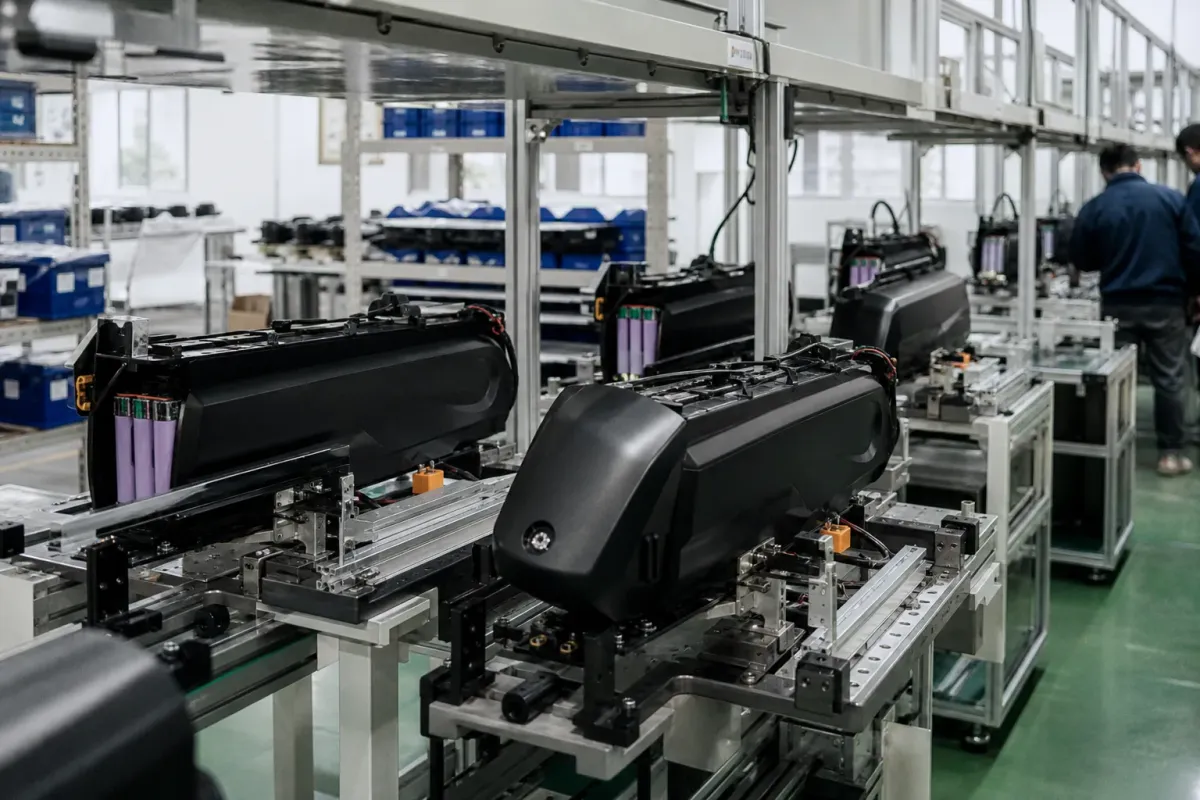
For most e-bike programs, the battery pack is the single most expensive component in the bill of materials, the longest pole in the certification schedule, and a frequent source of warranty claims. Yet it is often specified last and sourced on price alone. This guide walks through the six decisions that actually belong in your RFQ — so you can compare suppliers on equivalent terms instead of comparing a complete pack against a cheaper, lesser one.
The six specs every RFQ must pin down
Before you request a single quote, decide where you stand on each of these. Everything else — price, weight, range, approvals — follows from them.
| # | Spec | What you are deciding | What it costs to get wrong |
|---|---|---|---|
| 1 | Voltage | System architecture and available power | Controller mismatch; overvoltage protection trips or components fail |
| 2 | Cell format | 18650 or 21700 | Enclosure no longer fits; weld count and BOM cost move with it |
| 3 | Chemistry | NMC (Li-ion) or LiFePO4 | Wrong cycle life for the duty cycle — locked in after tooling |
| 4 | BMS | Protection thresholds and continuous-current headroom | Good cells cut out under load, or run unprotected |
| 5 | Certifications | Transport plus target-market access | Freight refused, or landed stock you cannot legally sell |
| 6 | Commercials | Cells used, MOQ, sample and mass lead time | Launch date slips; unit economics stop working at volume |
Each section below is the short version. We link to a deeper page where one exists.
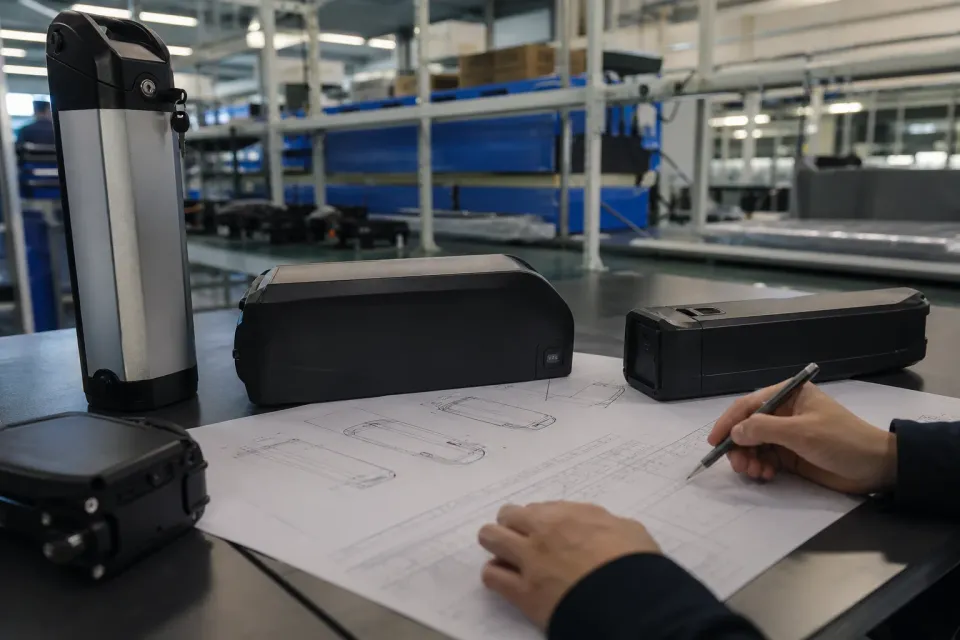
1. Voltage: match the system, not the spec sheet
E-bike packs are built around three nominal voltages — 36V, 48V, and 52V — with 60V and 72V appearing in cargo and light-motorcycle builds. The headline rule: the pack’s nominal voltage must match what your controller and motor are designed for. Running a 52V pack on a 48V-rated system can push the controller past its overvoltage threshold.
Higher voltage delivers more power at the same current, which matters for hill climbing, heavier riders, and cargo loads. A 36V pack is adequate for flat urban commuting; 48V is the mainstream choice for mixed terrain; 52V suits performance and load-carrying use. Decide voltage from the vehicle’s duty cycle first, then size capacity (Wh) to the range you advertise. For the head-to-head, see 48V vs 52V e-bike battery; the 48V OEM pack specs give a worked example.
2. Cell format: 18650 or 21700?
Both are cylindrical lithium cells; the numbers are dimensions in millimetres. The 21700 is roughly 50% larger by volume than the 18650 and carries higher energy density — capacities reach about 5,000 mAh versus roughly 3,500 mAh for a typical 18650. In practice, a 21700 pack hits a given Wh target with fewer cells and fewer weld points, which can improve reliability and pack-level energy density.
The 18650 remains a proven, widely second-sourced format and is often the better fit for slim enclosures or tight cost targets. For OEM volume, the deciding factors are enclosure geometry, the Wh you need, and cell availability from tier-1 suppliers — not the format in isolation. See 18650 vs 21700 cells for the full comparison.
3. Chemistry: NMC or LiFePO4?
This is the trade-off with the biggest downstream impact.
- NMC (nickel-manganese-cobalt) Li-ion has higher energy density — more range per kilogram and per litre — and generally better cold-weather behaviour. It is the default for consumer e-bikes where weight and range sell.
- LiFePO4 (LFP) is slightly heavier and less energy-dense, but delivers far longer cycle life — commonly 2,000 to 5,000+ charge cycles versus roughly 500 to 1,000 for NMC — and is prized for thermal stability and safety.
Choose NMC when range and weight drive the buying decision; choose LFP for high-utilisation fleets, rental, and delivery vehicles where total cycles and safety outweigh a few hundred grams. Match the chemistry to the duty cycle, not to a spec-sheet headline — see NMC vs LiFePO4 for e-bike batteries for the full comparison.
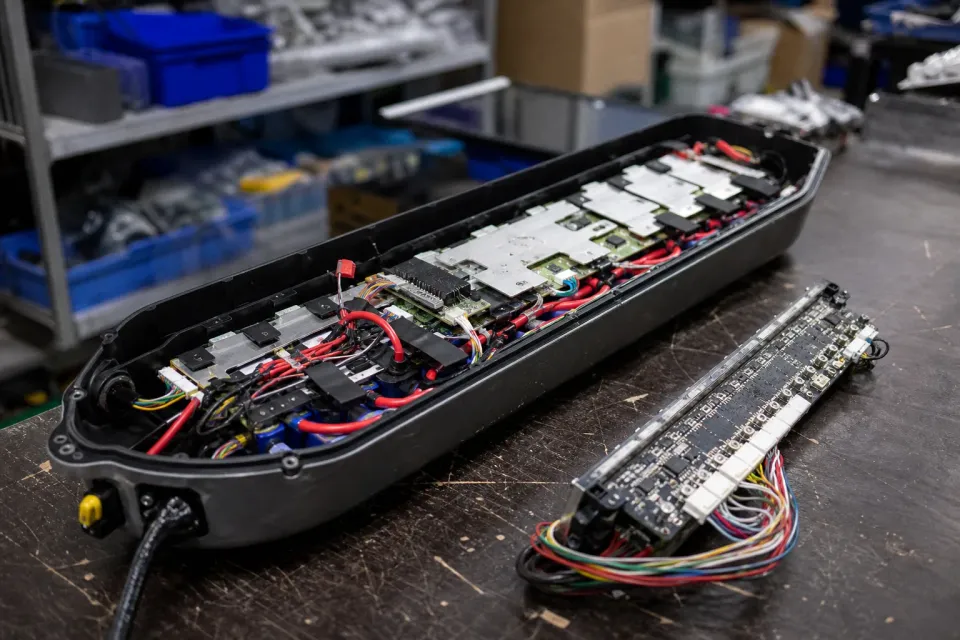
4. The BMS decides whether good cells stay safe
Premium cells can still underperform — or fail dangerously — behind a mismatched battery management system. The BMS handles cell balancing, over-charge, over-discharge, over-current, short-circuit, and temperature protection.
The number to check first is the continuous current rating, which must be matched to the cells, the controller, and the motor. As a reference point, a 48V pack paired with a 500W motor commonly uses a BMS in the 15A class; higher-power drivetrains need proportionally more headroom. In your RFQ, ask for the BMS continuous and peak current, the protection list, and whether communication (e.g. UART/CAN) or smart features are included.
5. Which certifications do you actually need?
Certification falls into two buckets, and missing either one stalls shipments.
Transport (non-negotiable). UN 38.3 — defined in the UN Manual of Tests and Criteria, Part III, sub-section 38.3 — is mandatory to move lithium cells and batteries by air, sea, or road. No UN 38.3 report, no freight.
Product and market access.
- IEC 62133 — international cell and pack safety standard, widely referenced for CE.
- UL 2849 — the US standard for the complete e-bike electrical system (battery, charger, drivetrain).
- EN 15194 — the EU standard for EPAC e-bikes (pedal assist, 250W / 25 km/h cap), required for import into the EU and several other markets. It is harmonised under Commission Implementing Decision (EU) 2023/69, which is what gives it presumption-of-conformity value.
Confirm which approvals your target markets demand before tooling, and ask the supplier for the actual test reports — not just a logo. For the full breakdown by market, see E-bike battery export certifications explained. Lizo Power supports CE, UN 38.3, IEC 62133, UL 2271, UL 2849, FCC, RoHS, WEEE, MSDS, RCM, and KC; see our quality and certifications page for the full matrix.
6. Cells, MOQ and lead time
Cells. Insist on tier-1 cells from authorized distribution. Lizo Power builds with Samsung SDI, LG Energy Solution, Panasonic, and CATL cells sourced through authorized distributors, which protects traceability and warranty. Ask any supplier to name the cell manufacturer and grade in writing — “A-grade lithium” with no brand is a red flag.
MOQ and lead time. These vary with capacity and customization. As a working reference, Lizo turns samples in 5–10 working days and mass production in 2–4 weeks after approval, with MOQ confirmed after a capacity review. Industry sample builds commonly land around 7–10 days once specs are locked, so treat much faster promises with caution. Build the approval and certification windows into your launch timeline from the start — see our manufacturing and QC capabilities for how the sample-to-mass process runs.
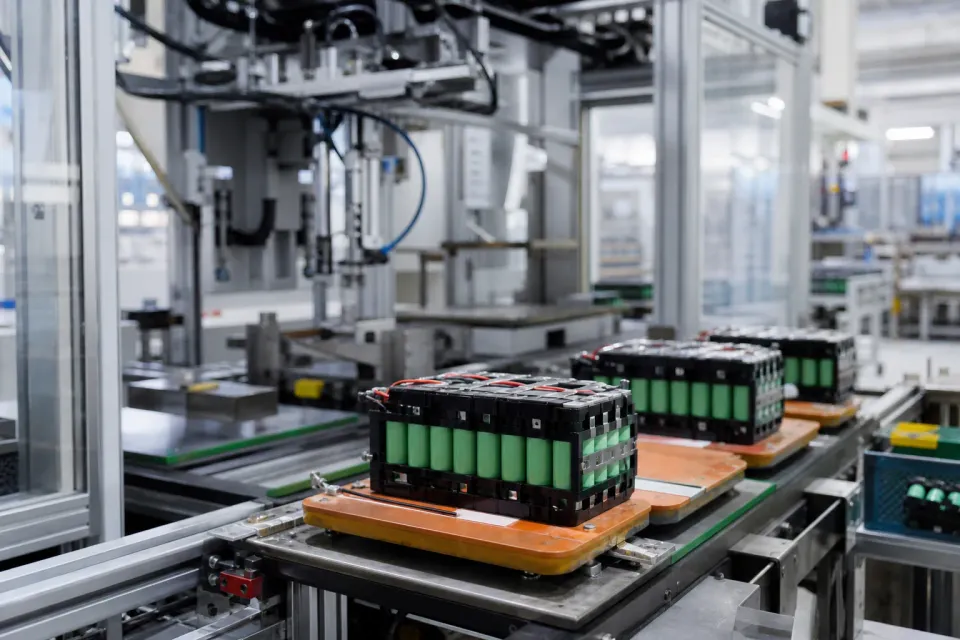
An RFQ checklist you can send to any supplier
Paste this into your next enquiry and you will get comparable quotes back:
- Nominal voltage and target capacity (V and Wh)
- Cell format (18650 / 21700) and named cell brand + grade
- Chemistry (NMC / LiFePO4) and expected cycle life
- BMS continuous/peak current, protection list, comms
- Enclosure/mount type and dimensional limits
- Required certifications by target market (UN 38.3 + IEC 62133 / UL 2849 / EN 15194)
- MOQ, sample lead time, mass-production lead time
- Warranty terms and what voids them
FAQ
What voltage should an OEM e-bike battery be? Match the pack’s nominal voltage to the controller and motor. 36V suits flat urban use, 48V is the mainstream all-round choice, and 52V (and above) suits performance, heavier riders, and cargo loads.
Is 21700 better than 18650 for an OEM pack? Often, yes for energy density — a 21700 is about 50% larger by volume and reaches higher capacity per cell, hitting a Wh target with fewer cells. But 18650 is proven, widely second-sourced, and can fit tighter enclosures or cost targets.
Which certifications does an e-bike battery need to export? UN 38.3 is mandatory to ship lithium batteries by air, sea, or road. Beyond that, market access typically requires IEC 62133, UL 2849 for the US, and EN 15194 for the EU.
Ready to specify a pack? Start from the product catalog to see the platforms we quote against, then send us your six answers above. Request a quote.