Private Label E-bike Batteries: What You Can Actually Customize
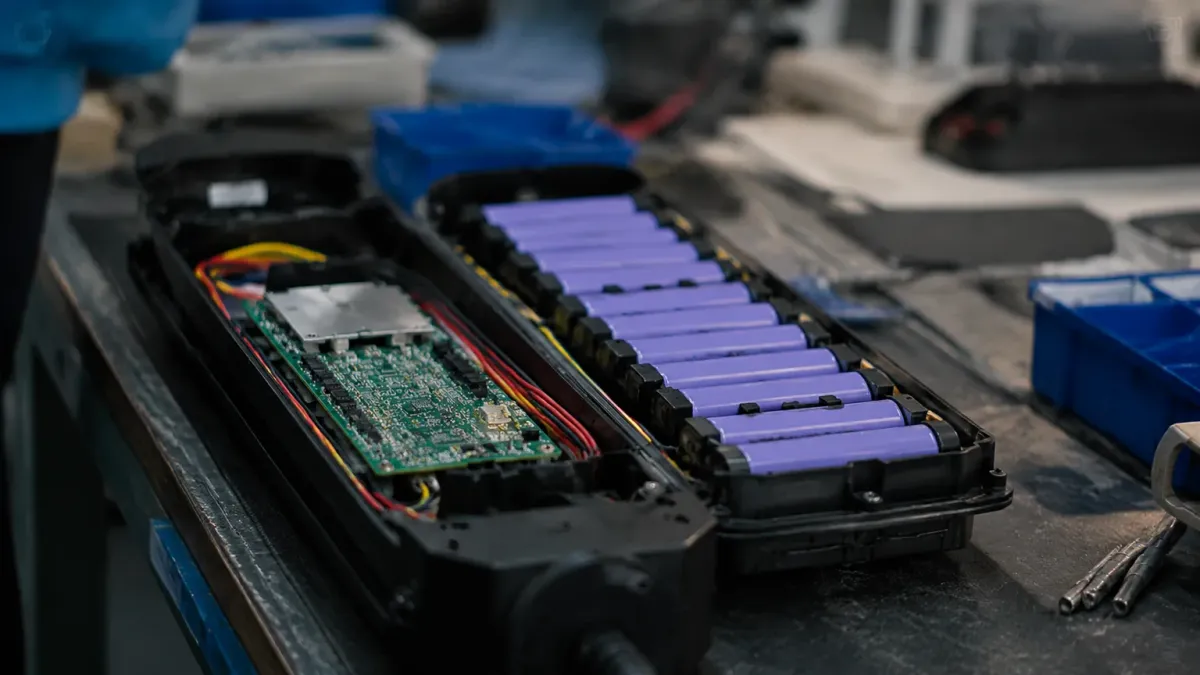
“Private label” gets used loosely. To some suppliers it means printing your logo on a stock pack; to others it means engineering a battery to your electrical and mechanical spec and shipping it in your branding — an ODM arrangement, where the design work sits with the factory but the product is yours. The gap between those two matters, because a re-labeled stock pack ties your brand to a design you don’t control — while a genuine private label ebike battery program lets you specify the parts that determine safety, fit, and lifespan.
If you are scoping an OEM program, the first job is to establish which of the two you are actually buying. This guide lays out what is genuinely customizable, how the workflow runs, and the commercial terms to pin down before you commit. It is the customization companion to our guide on choosing an OEM manufacturer.
What is actually customizable
The honest answer depends on volume and on whether the supplier designs their own pack. With an engineering-capable manufacturer, most of the pack is on the table:
| Element | Typical customization | Notes |
|---|---|---|
| Label & artwork | Your logo, part numbers, regulatory marks, multilingual text | Lowest barrier; possible even at sample volumes |
| Packaging | Branded boxes, inserts, manuals, barcodes/SKUs | Coordinate with DG transport labeling requirements |
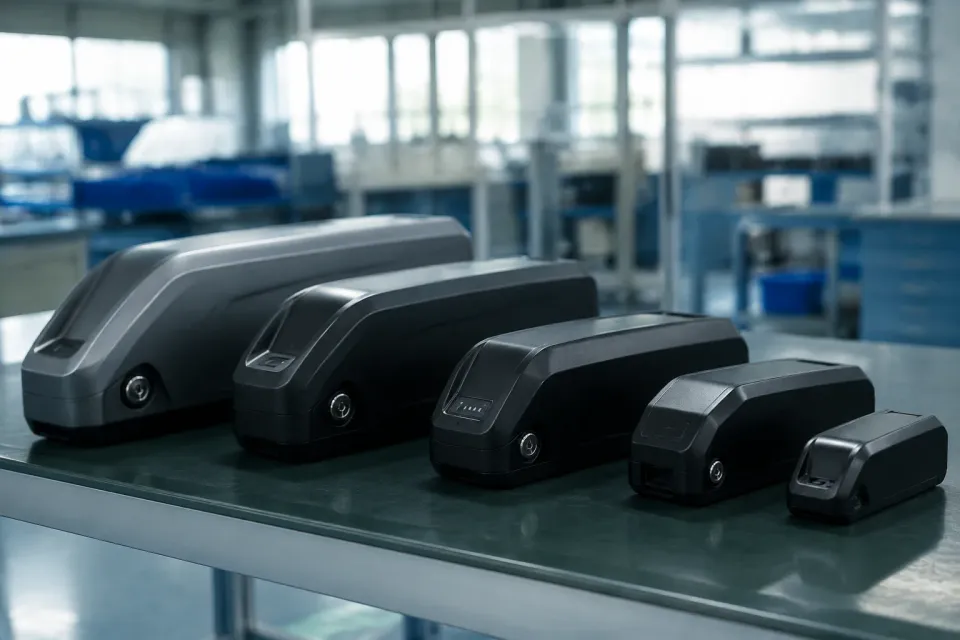
| Enclosure | Housing shape, mounting interface, color, ingress rating | May need tooling above a threshold volume |
| Connectors & harness | Discharge/charge connectors, pinout, cable length | Must match your controller and charger |
| BMS parameters | Voltage/current limits, cell balancing, protection thresholds | The core of pack behavior; needs in-house BMS design |
| Communication | CAN/UART/SMBus protocol, state-of-charge reporting | Relevant for fleet telemetry and smart chargers |
| Cell selection | Brand, grade, chemistry, format (18650/21700) | Drives capacity, cycle life, and cost — confirm the datasheet |
A useful test: ask the supplier which of these they can change and at what volume. A manufacturer with in-house BMS design will talk fluently about protection thresholds and communication protocols; a re-labeler will steer you back toward the sticker.
How the customization workflow runs
Customization is not a single step — it maps onto the same staged process a serious supplier uses for any OEM order. Ours runs in five stages, and each has a customization decision point:
- Requirements & MOQ confirmation — you define electrical spec, form factor, target market, and branding scope; the supplier confirms MOQ and feasibility.
- Design & engineering — pack layout, BMS parameters, and enclosure are specified against your controller and charger.
- Sample development — a functional sample in your configuration, typically in 5–10 working days, for fit and bench validation.
- Mass production — after sample approval, typically 2–4 weeks, with your branding applied.
- Packaging & shipment — branded packaging, correct dangerous-goods labeling, and compliance documents matched to the pack.
The decision points are where cost and lead time are set. Changing a label is free; changing an enclosure may require tooling; changing the cell grade changes the datasheet, the certifications, and the price. Front-load these choices so they don’t surface as change orders mid-production.
MOQ, tooling, and lead-time reality
Two variables set your entry cost:
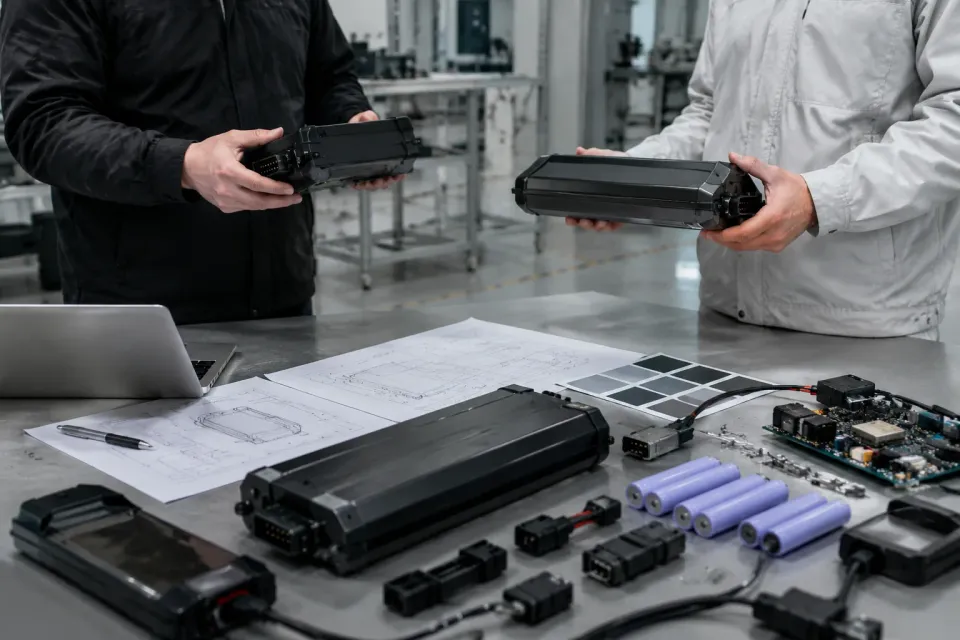
- MOQ. Cosmetic private labeling (logo, packaging) usually carries a low MOQ. Mechanical customization — a bespoke enclosure or a new mounting interface — often needs tooling, which raises the effective minimum and adds a one-time cost. Ask for the MOQ per customization tier, not a single blanket number.
- Sampling. Confirm the lead time and cost for a functional sample in your exact configuration. A supplier who will sample your spec (not just send a stock unit) is demonstrating real capability.
If a vendor quotes one MOQ regardless of how much you customize, treat it as a signal that the “customization” is cosmetic.
IP, branding, and who owns the design
Clarify ownership before the first sample, not after the third production run:
- Your artwork and trademarks remain yours — get that in writing, along with a commitment not to resell your branded pack to third parties.
- The pack design is usually the manufacturer’s platform, customized to your spec. If you need exclusivity or a design you fully own, that is a different (and more expensive) engagement — say so up front.
- Documentation — insist that compliance documents (UN 38.3 test summary, IEC 62133-2 report, CE) are issued for your configuration, not borrowed from a similar model. See our guide to verifying supplier certificates for how to check this.
Confirm these before you commit
A short pre-commit checklist for a private-label program:
- Scope: exactly which elements are customizable — label, packaging, connectors, enclosure, BMS parameters, cells.
- MOQ per tier: cosmetic vs mechanical vs electrical customization, with any tooling cost stated.
- Sample: lead time and cost for a functional sample in your configuration.
- IP: written confirmation your branding stays yours and won’t be resold.
- Documentation: compliance certificates issued for your exact pack.
From spec to branded pack
A real private-label partner welcomes these questions and answers them with a feasibility assessment, not a stock catalog. You can see how we structure customization on our capabilities page.
Private-label programmes usually start from our OEM pack platform. If you have a spec and a brand to put on it, send us your requirements and we’ll come back with a customization scope, MOQ per tier, and a sampling timeline.