Cargo Bike Batteries: How Load and Hills Change the Spec
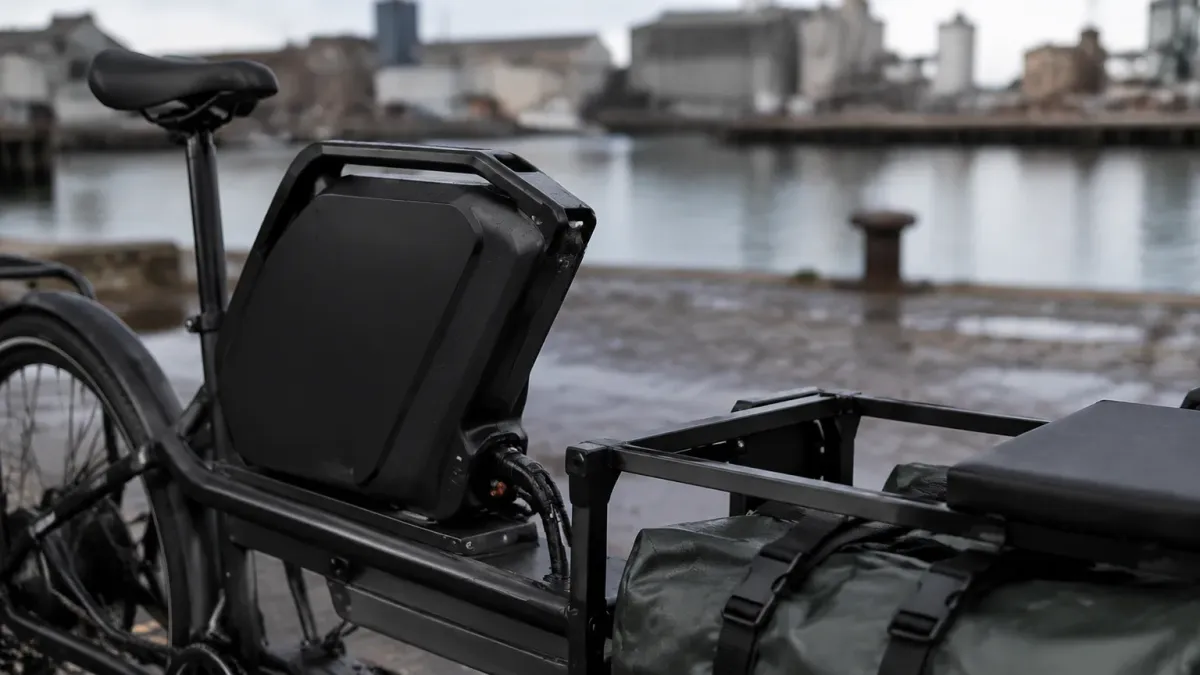
A cargo bike battery is judged by what it does under load, not by the number on a spec sheet. Load a bike with 100 lb of freight or two kids, point it up a hill, and the pack has to deliver sustained current while its usable range quietly shrinks. Most battery advice never gets past watt-hours — and watt-hours are exactly the wrong headline for a cargo bike.
What actually decides whether a cargo pack performs is the range it delivers once loaded, the continuous-discharge headroom on its BMS, and — for heavy daily hauling — whether one pack is even enough. This guide is a supplier-neutral framework for spec-ing to the load case, not the brochure case.
Why does a cargo bike never hit its rated range?
Manufacturer range figures are measured under the friendliest conditions: light rider, flat ground, low assist. Real cargo use is none of those. One cargo-focused editorial source describes riders getting around 50 km against an advertised ~80 km, and vendor data puts single-battery systems of 500–750 Wh at roughly 30–60 miles of real-world range in moderate conditions. Treat those as typical figures rather than guarantees, but the direction is unambiguous: load weight, hills, and motor type open a large gap between rated and real range.
The practical rule is to size to the loaded route, not the brochure. Estimate the energy your heaviest regular trip actually needs — with headroom — and spec from there. For how cell choice feeds into that energy budget, see our NMC vs LiFePO4 guide; if you run a fleet of these bikes, our delivery-fleet battery guide covers the duty-cycle economics.
How much continuous current does a cargo bike need?
Watt-hours tell you how far; they say nothing about whether the pack can deliver the current a loaded climb demands. This is where cargo packs fail quietly.
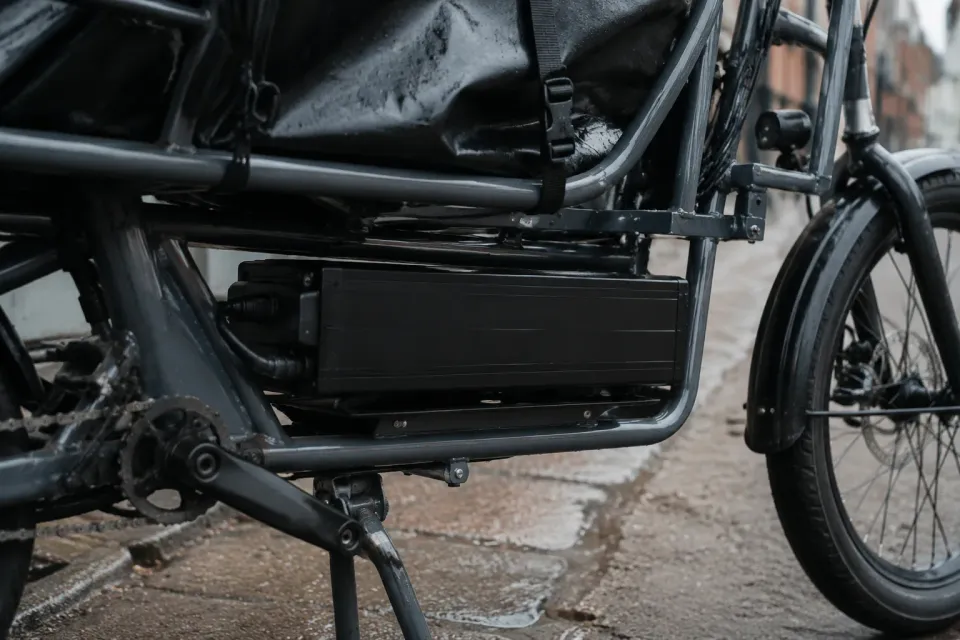
A mid-drive hauling a heavy load up a grade pulls sustained high current, and there is a hard engineering constraint: the BMS continuous discharge rating must be higher than the controller’s maximum current draw. If it is not, the BMS trips on overcurrent, the bike cuts out mid-climb, or the pack sags and heats. In other words, continuous current — not just capacity — is a gating spec for cargo.
When you evaluate a pack, ask for its continuous amp rating and confirm the BMS headroom over the controller’s peak draw, not only its watt-hours. Two packs with identical Wh can behave completely differently under a loaded hill if one has thin current headroom. Cell format matters here too — see the 18650 vs 21700 cell guide for how cells differ on current delivery.
Dual-battery and range extenders
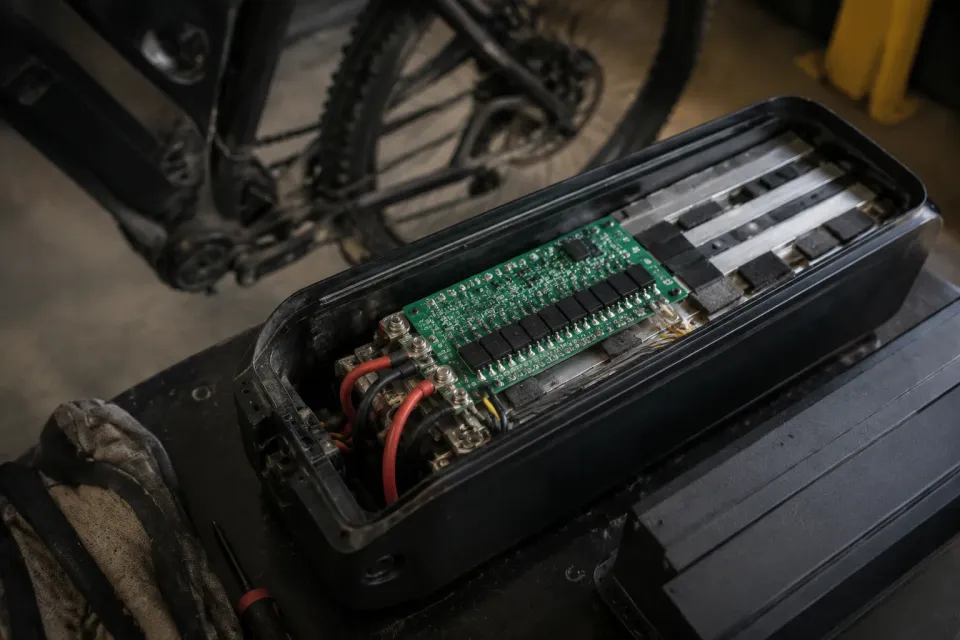
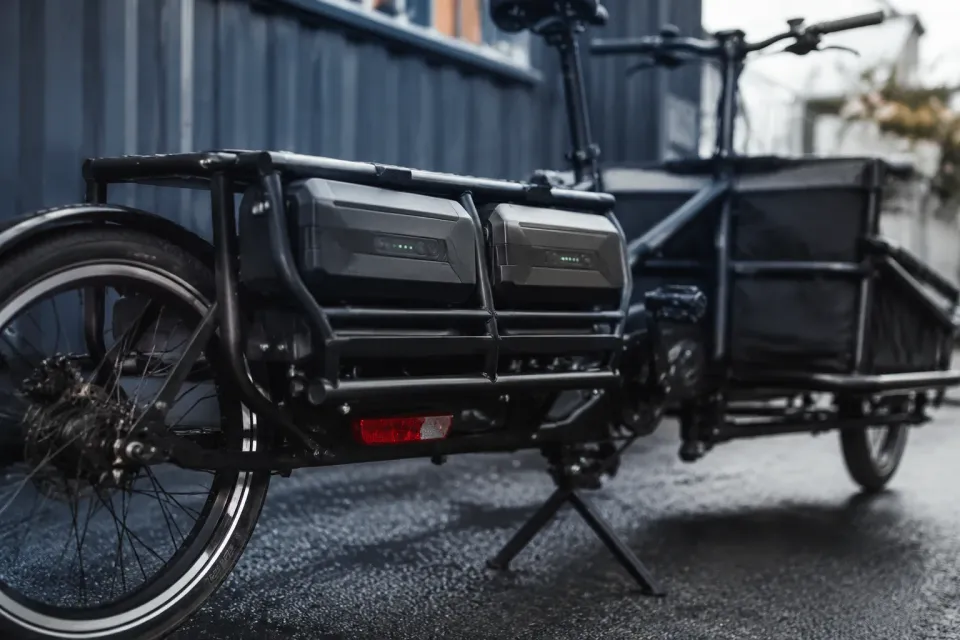
When a single pack can’t cover the loaded route, the standard cargo answer is more battery: a dual-battery system or a bolt-on range extender. In practice these reach roughly 1,000 Wh or more of total capacity, pushing usable range to 100+ km — up to around 160 miles on some utility builds — depending on load, terrain, and assist level.
Dual-battery pays off for heavy daily hauling and long utility routes where a single pack would leave you range-anxious or force a midday charge. The trade-offs to confirm up front are wiring and BMS compatibility, balanced discharge between packs, and charging logistics for two packs rather than one.
Payload, weight, and the current it demands
Cargo capacity has a ceiling. Even at the high end, cargo e-bikes generally top out around 440 lb of total system weight, and the closer you run to that limit, the more current the motor pulls — which loops straight back to the continuous-current point above. The battery has to sustain the load’s current draw, not merely carry its energy.
There is also a weight-versus-range trade-off hiding in the pack itself: a bigger battery adds weight the motor then has to haul, which eats into the very range you added it for. Past a point, a second smaller pack you can leave off for light trips beats one oversized fixed pack.
What IP rating does a cargo bike battery need?
Cargo and utility bikes work in the rain. Battery ingress protection therefore belongs on the spec list: most modern e-bike batteries carry IP65 to IP67 ratings under IEC 60529, the standard that defines the IP code, where IP67 indicates dust-tight construction and protection against brief immersion. For a bike that lives outdoors and works through weather, IP67 on the pack is a reasonable bar.
At Lizo Power we spec cargo and utility packs for exactly this combination — continuous-current headroom, dual-battery configurations, and IP65–IP67 durability — because the load case is where generic packs fall down.
A cargo battery selection checklist
Pulling it together, here is what to pin down before you commit — no new numbers, just the decisions above:
| Decision | What to pin down | What goes wrong if you skip it |
|---|---|---|
| Loaded energy budget | Size to the heaviest regular route with headroom, not the rated figure | Riders run out mid-route; rated range never survives a loaded hill |
| Continuous-current / BMS headroom | Continuous amp rating must exceed the controller’s peak draw | The BMS cuts out under load — reads to the rider as a dead bike |
| Dual-battery vs single | Second pack or range extender for heavy or long routes | Single-pack builds get oversized instead, adding weight |
| Weight trade-off | Stop oversizing once added pack weight eats the range gain | Heavier bike, no net range, worse handling under load |
| IP rating | IP65–IP67 for all-weather utility use | Water ingress on a bike that works outdoors year-round |
| Chemistry by use | NMC or LFP, per the delivery-fleet guide | Consumer-grade cycle life on a pack that gets cycled daily |
Where to go next
If you are choosing a supplier for these packs, our guide on choosing an OEM e-bike battery manufacturer covers diligence, and the import and compliance overview covers the regulatory side.
Cargo and utility packs are built on our custom pack platform. When you are ready to spec one, talk to our team — tell us your loads, routes, and motor/controller, and we will match capacity, continuous current, and durability to the job.
Frequently asked questions
How much range does a cargo e-bike battery have? Less than the rating once it is loaded. Single 500–750 Wh packs commonly give 30–60 miles in moderate real-world conditions, and heavy loads and hills cut that further. Size the pack to your loaded route with headroom.
Can you add a second battery to a cargo bike? Often yes — many cargo e-bikes support a dual-battery setup or a bolt-on range extender, reaching roughly 1,000 Wh or more of total capacity. Confirm wiring and BMS compatibility and charging logistics before committing.
What continuous-current rating does a cargo bike battery need? Enough that the BMS continuous discharge rating exceeds the controller’s maximum current draw. Loaded hill climbs pull sustained high current, so a pack with thin current headroom will trip or sag even if its watt-hours look fine.
What IP rating should a cargo bike battery have? For all-weather utility use, IP65–IP67 is the practical range, with IP67 indicating protection against brief immersion. It matters because cargo and utility bikes routinely work outdoors in the rain.