E-Bike Batteries for Performance eMTB: An OEM Buyer's Guide
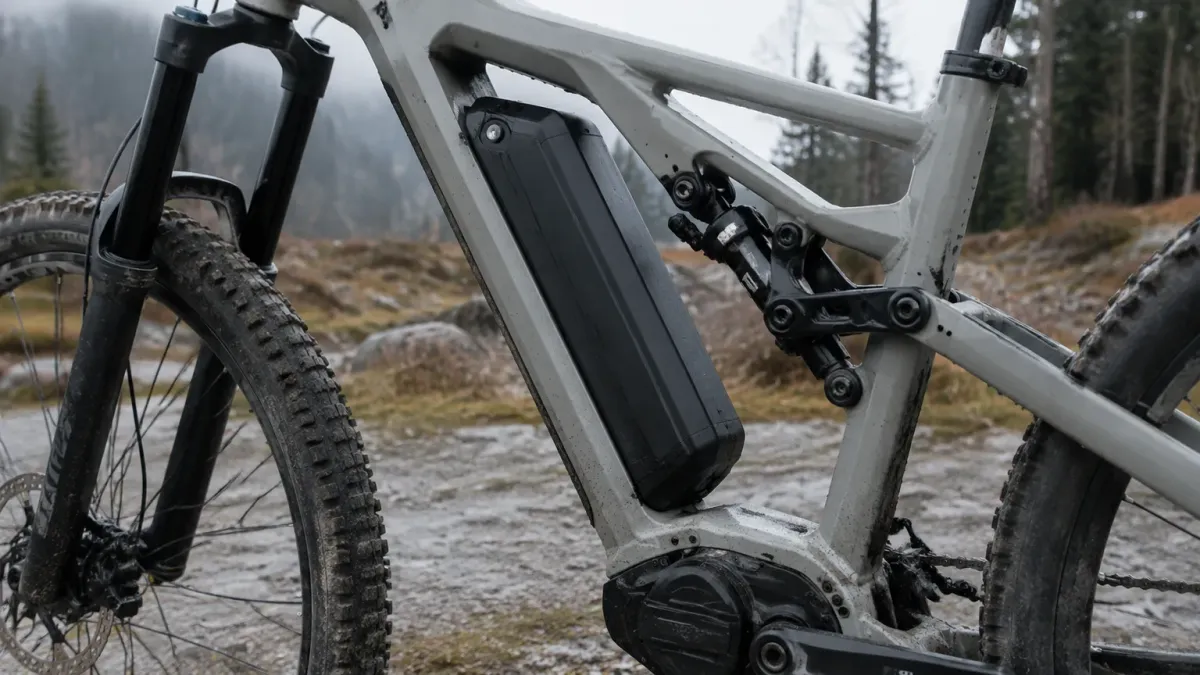
Performance and off-road e-bike motor systems have quietly outgrown the number on their spec sheet. Bosch’s Gen 5 Performance Line CX and CX-R, for example, unlocked via a 2025 software update, deliver up to 750W of power and 100Nm of torque at 400% assistance — on a system built to the EU’s EN 15194 EPAC standard, which caps nominal continuous motor power at 250W. That gap between the legal nominal figure and the real power a top-tier mid-drive can draw is exactly why battery selection for performance eMTB is a different engineering problem than for a commuter e-bike. The pack has to supply that current, on a climb, for as long as the trail demands it, without overheating.
Most published guidance still treats the battery as a headline watt-hour number. That is the wrong lens here. For performance and off-road builds, what actually decides whether a pack survives real use is discharge-rate headroom, how the cell trades energy density against weight, and thermal design under sustained load — not capacity alone. This guide is a supplier-neutral framework for OEM and brand teams spec’ing original batteries for performance/off-road lines, not a buying guide for individual riders or aftermarket upgrades.
Why performance eMTB is a different battery problem
A commuter e-bike battery mostly needs to survive gentle, steady-state discharge. A performance eMTB battery needs to survive repeated bursts of near-peak current on climbs and technical sections, on top of the base discharge from cruising. Bosch’s own figures for its top motor illustrate the scale of the gap: 400% assistance, 100Nm torque, 750W of power against the 250W nominal continuous rating that the EN 15194 EPAC standard caps EU pedal-assist systems at. That figure is a data point for one system, not an industry-wide spec, but it illustrates the direction the performance segment is moving in and why battery discharge headroom deserves engineering attention on its own.
Watt-hours don’t answer the question that actually matters here. What matters is how much current the pack can sustain, repeatedly, before its temperature climbs past what the BMS allows. Three levers decide that: how much continuous discharge headroom the pack has above the motor’s real draw, how the cell/pack design trades energy density against weight, and how the pack manages heat and mechanical stress under sustained off-road use. The rest of this guide works through each one.
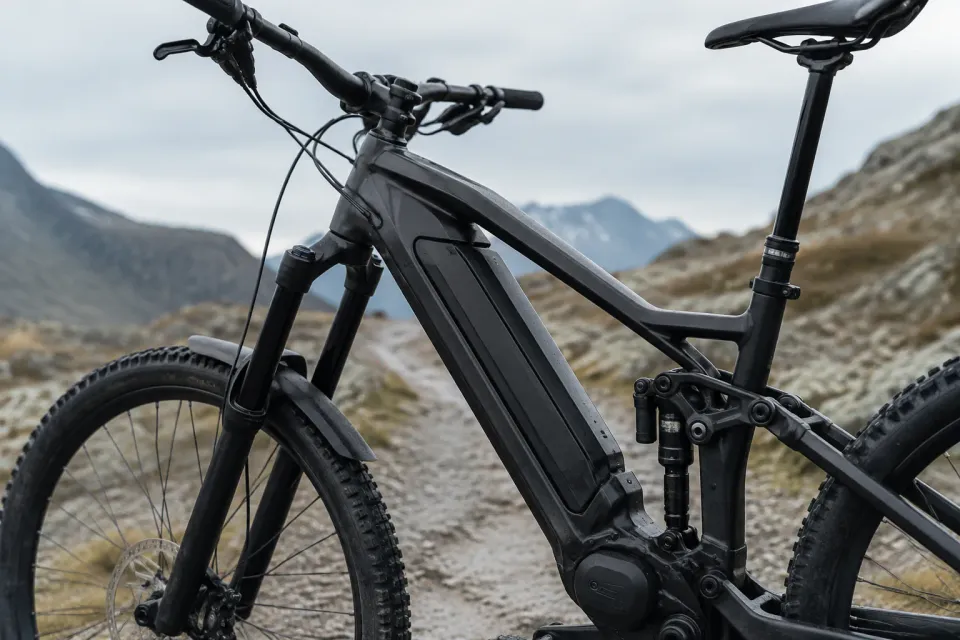
Discharge-rate headroom: what actually limits continuous current
Every lithium cell has a continuous discharge rating, expressed as a C-rate — current relative to the cell’s capacity. Typical continuous ratings sit around 1C: a cell rated at 1C can sustain a current equal to its capacity (in amp-hours) indefinitely. Push past that continuous rating and internal temperature climbs until the battery management system derates the output or opens the circuit to protect the pack. That ceiling, not the cell’s nameplate capacity, is what determines whether a pack can keep up with a motor drawing near-peak power on a sustained climb.
Translating a motor’s power figure into a current demand is straightforward: discharge current follows I = P / V. For the same power draw, a higher pack voltage produces lower current — which is one reason performance builds tend toward higher system voltages rather than simply adding more amp-hours at a lower voltage. A pack spec’d only against average riding power, without headroom for sustained climbing or technical-terrain draw, is a pack that will hit its C-rate ceiling on exactly the rides a performance rider cares about most.
For the underlying cell-format detail — how 18650 and 21700 formats differ in the current they can deliver — see our 18650 vs 21700 cell guide; this guide stays on the pack-selection layer rather than re-deriving cell specs.
It’s worth being explicit about which part of a ride actually stresses the pack. Descending and flat cruising draw modest, often intermittent current — a pack rarely struggles there. The stress case is sustained climbing and technical terrain, where the motor holds near-peak output for minutes at a time and the pack has nowhere to recover between draws. Specifying discharge-rate headroom against average trip power, rather than against that sustained-climb case, is the single most common way a pack ends up under-speced for a performance build.
C-rate ceiling depends on chemistry and cell design — not chemistry alone
Chemistry sets a baseline, but it doesn’t set a single number. Typical continuous C-rates published for common chemistries look roughly like this (treat as illustrative, vendor-typical figures — always confirm against a specific cell’s datasheet):
| Chemistry / cell type | Typical continuous C-rate | High-drain ceiling |
|---|---|---|
| NCM (standard) | ~1C | up to ~10C (specialized high-drain 18650 cells) |
| LiFePO4 (standard) | ~1C | up to ~3C (prismatic cells) |
The spread inside a single chemistry matters more than the label. Peer-reviewed testing of commercial cylindrical cells found specific energy ranging from roughly 114 to 237.5 Wh/kg across different 18650 and 20700 cell designs — a wide range within the same format — and the cells engineered for high power with lower internal heating were validated to discharge rates up to 12C at up to 25A. In other words, “18650” or “NMC” alone doesn’t tell you what a pack can do; the specific cell’s internal design does.
That makes energy density versus weight versus discharge headroom a three-way tension, not a two-way trade-off. A cell optimized purely for Wh/kg may not hold up to sustained high-C draw; a cell built for high-drain performance may cost some energy density. For the deeper chemistry comparison — cycle life, safety, and energy-density trade-offs between NMC and LiFePO4 — see our NMC vs LiFePO4 guide.
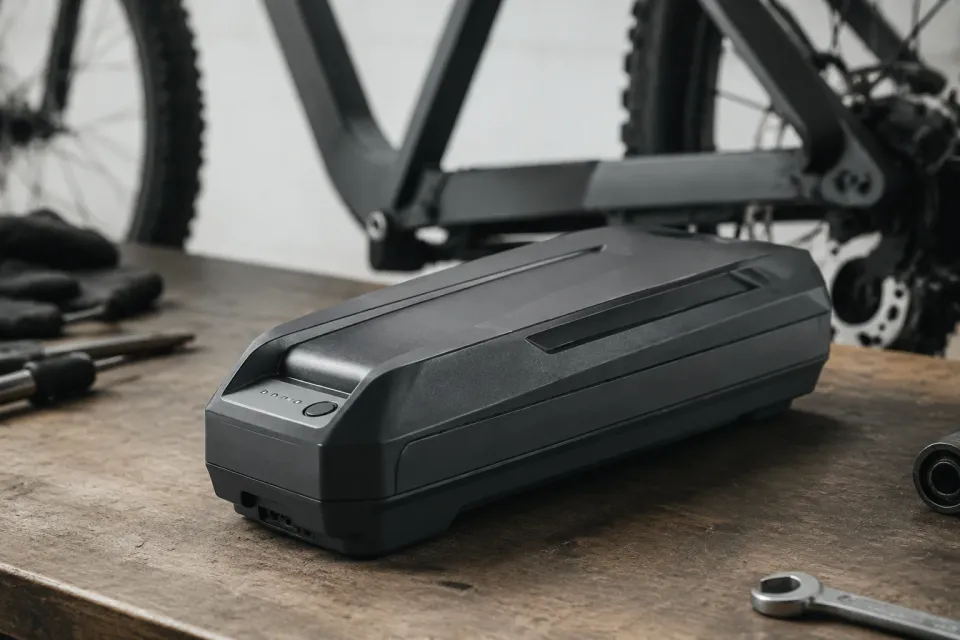
Thermal management under sustained high-C load
The mechanism connecting discharge rate to real-world reliability is heat. Running a cell above its continuous discharge rating raises internal temperature, and if the pack’s thermal design can’t dissipate that heat fast enough, the BMS derates output — or, over repeated cycles, the elevated temperature accelerates capacity fade even when the BMS doesn’t trip.
For performance eMTB, this matters more than for most other e-bike scenarios because the load isn’t brief. A five-minute technical climb at near-peak power is sustained high-C draw, not a short burst the pack can shrug off between periods of light load. That’s a meaningfully different thermal profile than a delivery bike’s steady low-C cruising or a commuter’s occasional hill.
The practical implication for an OEM buyer: a cell datasheet’s C-rate number describes the cell in isolation, typically under lab conditions. It doesn’t describe how that cell behaves inside a specific pack, with a specific BMS and a specific thermal path. Ask suppliers for pack-level thermal design evidence — how the pack is expected to perform under sustained climbing loads, not just the cell’s rated C-rate — rather than assuming a good cell number guarantees a good pack. At Lizo Power, cell and pack selection for performance builds is driven by this discharge-rate-and-thermal-design pairing, not capacity alone.
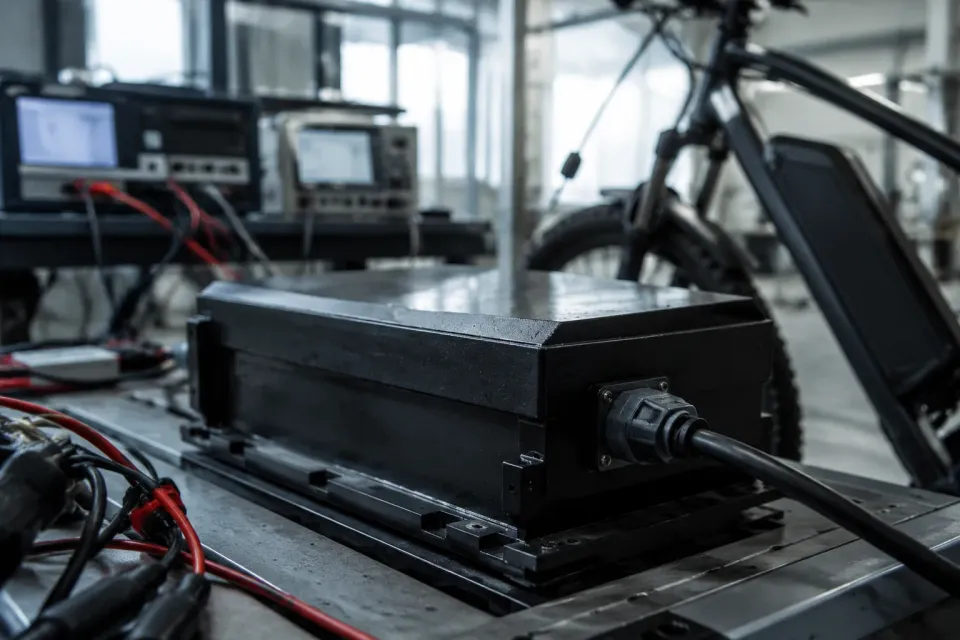
Ruggedness for off-road use: transport certification isn’t in-use durability
Every lithium pack that ships internationally already has to pass UN38.3, the UN test standard covering safe transport. Two of its eight tests are directly about mechanical stress: T.3 Vibration runs a sinusoidal frequency sweep from 7Hz to 200Hz and back, repeated across three hours per axis on all three axes; T.4 Shock subjects the pack to a half-sine shock pulse — 150g peak acceleration for small cells — three times in each direction on each axis, 18 shocks total. A pack has to survive both with no leakage, venting, rupture, or fire, and retain at least 90% of its pre-test open-circuit voltage.
That is a meaningful mechanical baseline — but it’s a transport-safety certification, not an in-use durability standard. UN38.3 simulates what a pack experiences being shipped, not what it experiences strapped to a frame taking repeated impacts on a rock garden for years of trail riding. Every compliant pack on the market has passed T.3 and T.4; that alone says nothing about how it holds up to sustained off-road vibration in service. For an OEM buyer, the useful question isn’t “is this pack UN38.3 certified” — that should be assumed — it’s what additional in-use vibration or durability validation, if any, the supplier runs beyond the transport-certification floor.
Putting it together — a performance eMTB battery selection checklist
Pulling the levers together, here’s what to pin down before committing to a pack for a performance/off-road line — no new numbers, just the decisions this guide has walked through:
- Discharge-rate headroom: does the pack’s continuous C-rate clear the current implied by the motor’s real peak power (I = P / V), with margin for sustained climbing, not just average riding?
- Cell-design specifics, not just chemistry label: what is this specific cell’s tested continuous and high-drain C-rate — not the chemistry’s typical range?
- Energy density vs. weight budget: where does this cell sit on the Wh/kg spectrum for its format, and does that fit the frame’s weight target?
- Pack-level thermal design evidence: how has the supplier validated thermal performance under sustained high-C load, beyond the cell’s datasheet number?
- In-use ruggedness beyond UN38.3: what vibration/durability validation, if any, goes beyond the transport-certification floor?
- BMS derating behavior: at what temperature and current does the BMS start protecting the pack, and how does that show up to the rider mid-climb?
Where to go next
If the next question is who to source this from rather than how to spec it, our guide on choosing an OEM e-bike battery manufacturer covers supplier due-diligence. For the cell-format and chemistry deep dives referenced throughout this guide, see 18650 vs 21700 and NMC vs LiFePO4. Spec-ing for a different high-demand scenario — cargo/utility load or a delivery fleet? See our cargo bike battery guide and delivery-fleet battery guide for how those duty cycles change the spec.
Performance and off-road packs are built on our custom pack platform. When you’re ready to spec one, talk to our team — tell us the motor’s power profile and your weight and discharge-rate targets, and we’ll help match cell, pack design, and thermal strategy to the duty cycle.
Frequently asked questions
What size battery does an eMTB need? Sizing by Wh alone misses the point for performance builds. The pack also needs enough continuous discharge headroom to clear the motor’s real peak current draw (not just its nominal rating) without hitting its C-rate ceiling on sustained climbs.
Is a bigger e-bike battery always better for performance? Not necessarily. A larger pack adds weight, which works against the energy-density-per-kilogram goals of a performance build. The better lever is often a cell/pack design with more discharge-rate headroom and better thermal management at the same capacity, not simply more capacity.
Why do e-bike batteries get hot when climbing? Climbing sustains high motor power draw, which means sustained high discharge current from the battery. Running above a cell’s continuous discharge rating generates heat faster than the pack can dissipate it, which is what triggers BMS derating or accelerates wear.
Are integrated e-bike batteries better than removable ones for performance riding? That’s a pack-integration and serviceability decision, not a discharge-rate one — both formats can be engineered for the same C-rate and thermal targets. The discharge-rate, energy-density, and thermal-design criteria in this guide apply regardless of whether the pack is integrated or removable.