E-bike Battery Cell Brands & Grades: An OEM Buyer's Guide
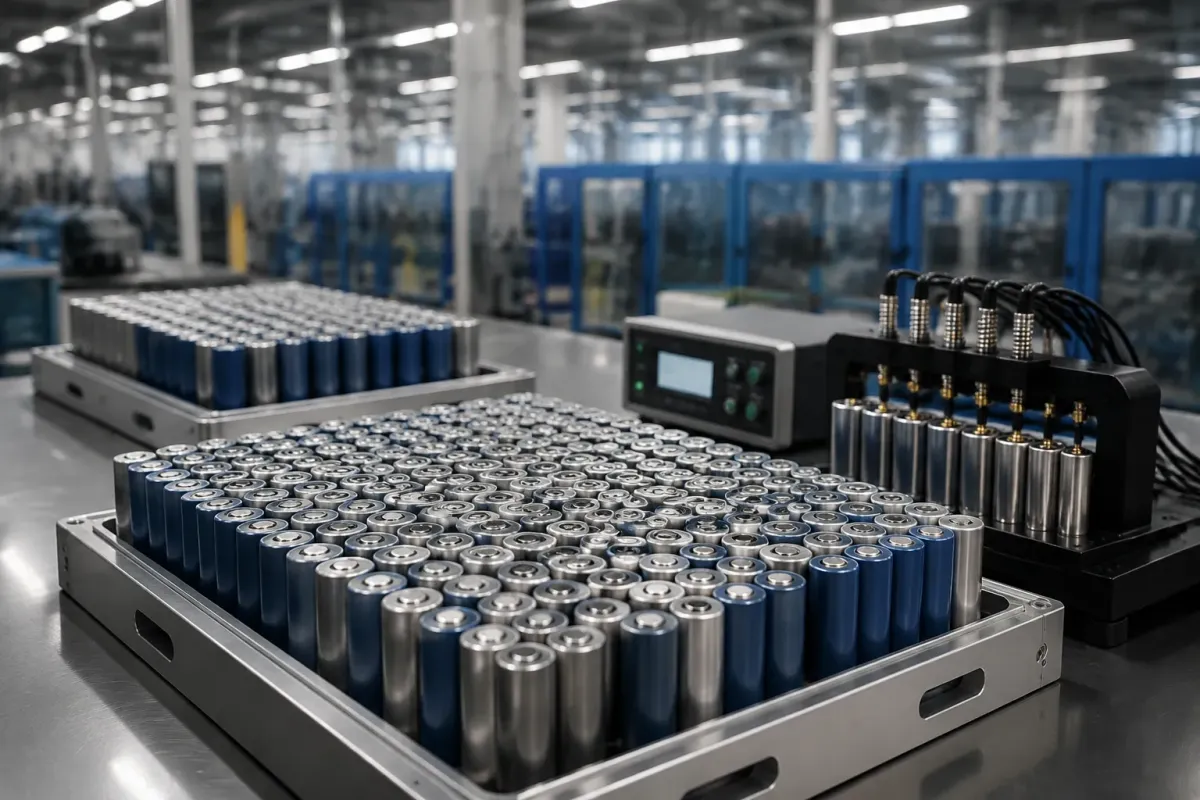
Every e-bike battery quote names a cell brand. “Samsung cells.” “LG cells.” The number that decides whether the pack lasts sits one level down, and most quotes never state it: the grade. The same INR21700 model can ship as A-grade, as a downgraded B-grade, or, relabelled, as used cells pulled from another pack. The wrapper and the part number look identical in all three cases.
For an OEM putting its own name on the finished bike, the risk is not which country made the cell. It is whether the cell inside the pack is the grade you paid for, from the maker on the label.
What cell grade actually means
Cell grade is a sorting outcome, not a certificate. After production, cells are tested and binned. The ones that meet full specification on capacity, internal resistance, batch consistency and appearance are sold as Grade A. Cells that fall slightly below spec are downgraded to Grade B or C, and used or reclaimed cells sit below that. In practice the tiers separate along four dimensions: parameter accuracy, appearance, batch consistency, and intended application. Only the first of those is measurable against a published method — IEC 61960-3 defines how rated capacity and performance of portable secondary lithium cells are actually measured, which is the test you should be asking to see. The other three are judgement calls made inside the cell maker’s sorting line, and that is where buyers get caught out.
There is no official grade standard. No ISO or IEC body issues a “Grade A” certificate — what the standards bodies publish is safety (IEC 62133-2) and measurement method (IEC 61960-3), never a grade letter. Grading is a universal industry practice, not a certified status, so any supplier can print the words. That is why a grade on a quote means nothing without the test data behind it.
Grade sits on a separate axis from two things buyers often fold into it. One is cell format: 18650 versus 21700 is a size choice, covered in our guide to 18650 vs 21700 cells. The other is chemistry: NMC versus LiFePO4 is a different decision again, covered in NMC vs LiFePO4. A cell can be the right format and the right chemistry and still be a B-grade unit.
Why grade, not brand origin, is the real risk
Put two quotes side by side, both labelled “Grade A,” and the price can differ by more than 30%. That gap does not vanish — it reappears later as warranty claims. The label was the same. The cells were not.
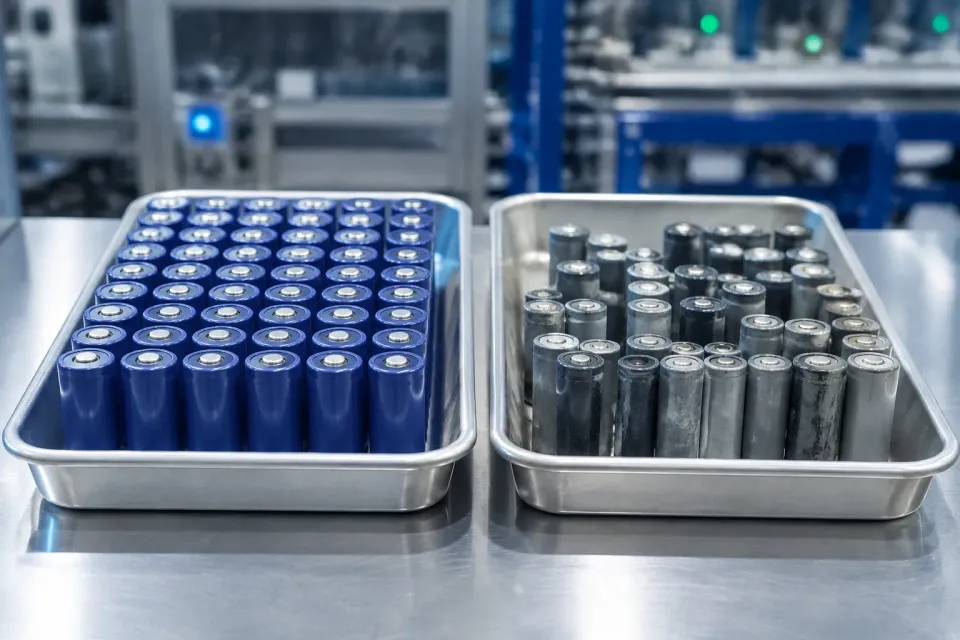
Below B-grade, the harder problem is used cells. Retired cells still hold usable capacity. An EV cell at 70% of its original capacity has a real second life in stationary storage, but it cannot simply be treated as new. The peer-reviewed literature on second-life batteries is blunt that a state-of-health assessment is required before a retired cell is redeployed, because used cells carry higher and less predictable risk than new ones. A pack built from reclaimed cells sold as new is the worst kind of grade problem: hidden age, unknown history, and a safety margin no datasheet describes.
Origin is the wrong thing to fixate on. A genuine A-grade cell from a Chinese tier-1 maker will outperform a re-wrapped “Samsung” B-grade cell every time. The question to put to a supplier is not “is it Japanese or Chinese.” It is “which grade, and can you prove it.”
The tier-1 cell brands in e-bike packs, and the China question
Who actually makes tier-1 cells
Four names cover most quality e-bike packs: Samsung SDI and LG Energy Solution (Korea), Panasonic/Sanyo (Japan), and the Chinese tier-1 makers EVE, BAK and Lishen. Molicel, from Taiwan, is usually added for high-power cells. These are the makers with consistent QC and published datasheets.
Energy cells versus power cells, by the datasheet
Does Korean or Japanese branding mean a better cell than Chinese? On the 21700 energy cells that go into most e-bike packs, the datasheets say no. Set EVE’s INR21700-50E next to the Korean flagships:
| Brand / Model | Origin | Typical capacity | Max continuous discharge | Nominal voltage | Type / note | Source |
|---|---|---|---|---|---|---|
| Samsung INR21700-50E | Korea | 5,000 mAh | 9.8 A | 3.6 V | Energy cell, 256 Wh/kg | Independent characterisation |
| LG INR21700-M50LT | Korea | 4,800 mAh | 14.4 A | 3.69 V | Energy cell, 270 Wh/kg | Independent characterisation |
| Samsung INR21700-50S | Korea | 5,000 mAh | 25 A | 3.6 V | Power-leaning | About:Energy cell library |
| Molicel INR21700-P42A | Taiwan | 4,200 mAh | 45 A | 3.6 V | Power cell, 15.5 Wh | Molicel datasheet (PDF) |
| EVE INR21700-50E | China | 5,000 mAh | 15 A (10 A moderate) | 3.65 V | Energy cell, IR ≤ 18 mΩ | EVE Energy product page |
| EVE INR21700-50PL | China | 5,000 mAh | 125 A (full-tab) | 3.6 V | High-power full-tab | Distributor listing |
One caveat about that Source column, and it is the point of this whole article: Samsung SDI and LG Energy Solution do not publish public datasheets for these consumer cells. The figures circulating for them come from independent characterisation and bench testing, not from the maker. EVE and Molicel do publish. That asymmetry is exactly why you ask your pack supplier for the datasheet they were given by the cell maker, plus a per-batch test report — a public spec sheet is not available to check them against.
The EVE 50E delivers the same 5,000 mAh class capacity as the Samsung 50E, next to LG’s 4,800 mAh M50LT: three energy cells from three makers in one performance tier. The split that matters in this table is not country. It is energy versus power. Energy cells such as the two 50E’s and the M50LT maximise capacity at modest current. Power cells trade capacity for current: Molicel’s P42A runs 45 A continuous, and EVE’s full-tab 50PL is rated at 125 A. A Chinese maker, EVE, competes in both. Which cell you want depends on the bike’s duty cycle, a spec decision covered in our pack sourcing guide. The point here is that all four brands field tier-1 cells.
How to verify the cells you are being sold
A brand name on a quote is a claim, not evidence. Here is how to check it, most of it before a single pack ships.
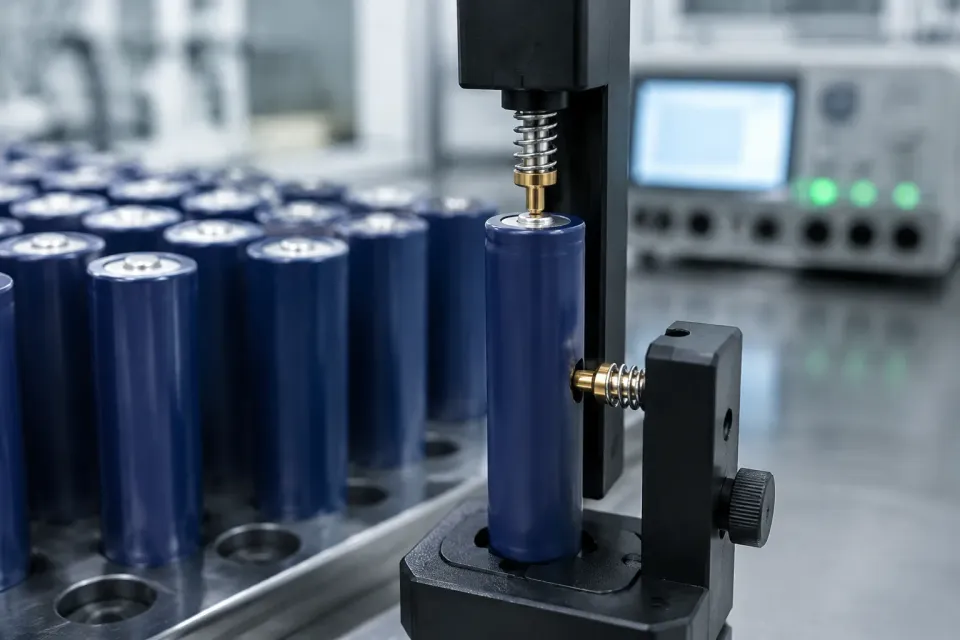
Measure the cell against its own model’s numbers. A genuine cell model has a specific weight, diameter, height, top-cap construction, open-circuit voltage and internal resistance. 18650BatteryStore’s authenticity work makes the point that a real Samsung 30Q, LG MJ1, Molicel P28A and Murata VTC6 do not share the same weight, dimensions or internal resistance. A cell that fails to match its own model’s figures is not that model, whatever the wrapper says. Wrapper colour alone stopped being a reliable indicator years ago. The checkable signals are physical (weight, dimensions, top cap) and electrical (open-circuit voltage, internal resistance, and a controlled discharge test on samples).
Read the date code. Manufacturers print a production date and lot code on the cell. As Battery Bro’s date-code tooling shows, that code helps confirm or deny whether a cell is as recent, and as genuine, as the seller implies. Fresh, consistent date codes across a batch are a good sign. Missing, inconsistent or unreadable codes are a warning.
Check the quote against the manufacturer datasheet. This is where reseller listings give themselves away. Look up the LG INR21700-M50LT across sellers and its nominal voltage appears as 3.69 V, 3.7 V, and even 3.96 V, with maximum continuous current quoted as 14.4 A or 14.7 A. The manufacturer datasheet has one answer, 3.69 V and 14.4 A, per LG’s own figures. If a supplier’s numbers do not match the datasheet for the exact model, have that conversation before you order.
Ask for the per-model UN 38.3 report. Every lithium cell model must pass UN 38.3, the UN Manual of Tests and Criteria, Section 38.3. It is an eight-test set (altitude, thermal, vibration, shock, external short circuit, impact and crush, overcharge, forced discharge) that a cell must pass before it can ship as UN3480 or UN3481. You need that report for transport anyway. Our air and sea shipping guide and US compliance guide cover the logistics. For verification it also serves as traceability: a report tied to the exact cell model is one more document a relabelled cell cannot produce. Certificate authenticity is worth checking too. See how to verify battery certificates.
The OEM RFQ due-diligence checklist
Write these into the RFQ and the purchase order, where they are binding:
- Name the exact cell model and grade in the PO (for example, “Samsung INR21700-50E, A-grade, new”). A named grade is one you can hold the supplier to.
- Request the manufacturer datasheet for that model.
- Request the per-model UN 38.3 test report.
- Require readable, consistent date and lot codes across the batch.
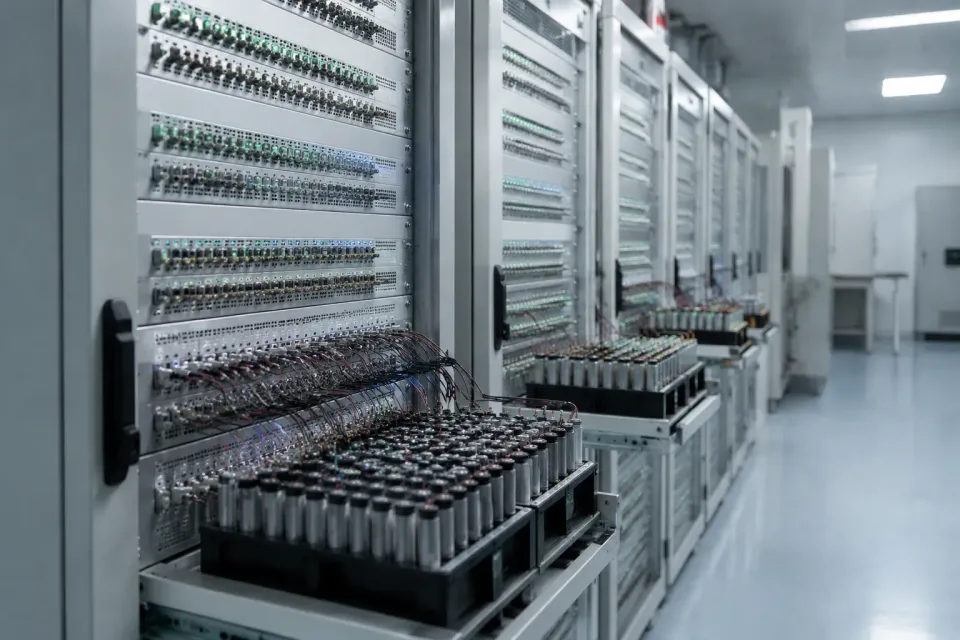
- Ask for capacity and internal-resistance test data on the delivered cells.
- Ask for a batch-matching (consistency) report.
- Ask for proof of authorized-distributor sourcing where the brand supports it.
- Approve a sample, with all of the above, before releasing the mass order.
A supplier that can produce these is showing its work. One that cannot, or will not, has answered the question. Vetting the supplier itself is the next step. Our guide to choosing an OEM manufacturer covers that.
What a transparent OEM looks like
A cell claim you can verify is worth more than a brand name you cannot. A straightforward supplier will name the exact cell model and grade, hand over the datasheet and per-model UN 38.3 report, and let you sample against them before you commit.
At Lizo Power we build OEM e-bike packs from branded A-grade cells and supply the datasheet, per-model UN 38.3 report, and batch traceability to match. To see what documented cell provenance looks like on your own bench, request a sample and the paperwork.
FAQ
What are A-grade vs B-grade lithium cells? A-grade cells meet full specification on capacity, internal resistance, consistency and appearance. B-grade cells fall slightly below and are downgraded. It is an industry sorting convention, not a certified standard, so the grade means little without test data behind it.
How do you authenticate branded 18650/21700 cells? Match the cell to its model’s own figures: weight, dimensions, top cap, open-circuit voltage and internal resistance. Read the date code, and check the supplier’s quoted specs against the manufacturer datasheet. Wrapper colour alone is not enough.
Which cell brands are used in e-bike battery packs? Samsung SDI, LG Energy Solution, Panasonic/Sanyo, and the Chinese tier-1 makers EVE, BAK and Lishen, with Molicel common for high-power cells. All field tier-1 cells. The meaningful split is energy cells versus power cells, not country.
Is a recycled or second-life cell dangerous? Used cells carry higher and less predictable risk than new ones and need a health check before reuse. Sold as new, they are a serious problem, which is why a new-cell guarantee and readable date codes matter.